
Downsizing for Retirement: How to Sell Your House on Your Timeline
Downsizing for retirement is an opportunity to rethink what you want from your home and your next chapter. Maybe the kids have moved out, the extra bedrooms aren’t being used, or maintaining a larger property has become more work than it’s worth.
Whatever your reason, downsizing can be an exciting next chapter. But after spending decades in the same house, figuring out where to start isn’t always easy.
Between sorting through belongings, finding a new place to live, and deciding how to sell your current house, there’s a lot to consider.
The good news? Downsizing your home doesn’t have to happen all at once, and you don’t have to follow someone else’s timeline.
Whether you’re planning to move in a few weeks or simply exploring your options, here’s how to approach the process with greater confidence.
1. Downsizing for Retirement: Start With Your Next Home
Before thinking about selling, take some time to consider what you’re looking for in your next chapter.
For some homeowners, downsizing for retirement means moving into a smaller house with fewer rooms to maintain. For others, it means relocating closer to family, finding a single-story home, or choosing a community where exterior maintenance is handled for them.
Ask yourself a few questions:
- How much space do I actually use in my current home?
- Would a smaller property make everyday life easier?
- Do I want to stay in the same Chicagoland community or move somewhere new?
- Would I prefer a home with fewer stairs or less outdoor maintenance?
- What monthly housing expenses would I be comfortable with during retirement?
Your answers can help you determine what type of home makes sense for your lifestyle and budget.
Remember, downsizing isn’t necessarily about giving something up. It’s about choosing a home that better fits the life you want to live.
2. Make a Plan for the Belongings You’ve Collected Over the Years
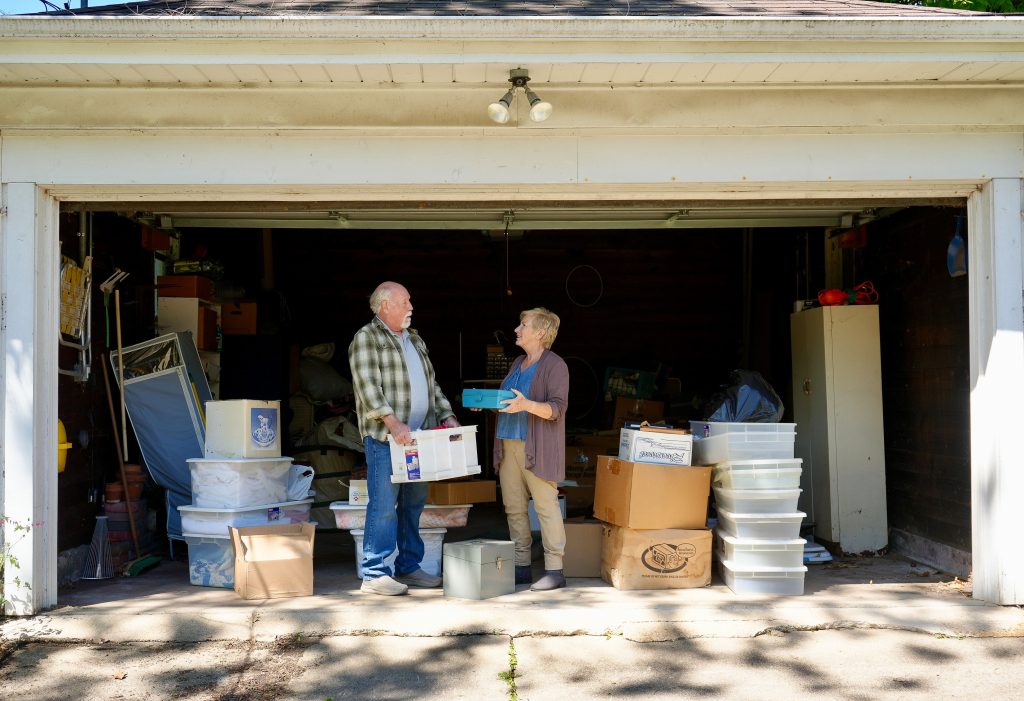
Sorting through years of belongings is often one of the biggest steps in preparing to downsize.
When downsizing for retirement, one of the biggest challenges isn’t necessarily finding a new place to live. It’s deciding what to do with everything you’ve accumulated in your current house.
After 20, 30, or even 40 years, a home can hold an incredible number of belongings, from furniture and household items to family photographs and keepsakes.
And not everything is easy to part with.
Rather than trying to tackle the entire house at once, start small.
Choose one room or area and separate belongings into four categories:
- Keep: Items you use regularly or want to bring into your next home.
- Give to family: Meaningful belongings that loved ones may want.
- Donate or sell: Furniture, clothing, and household items you no longer need.
- Leave for later: Items you’re not ready to make a decision about.
You don’t need to make every decision in a single weekend.
In fact, giving yourself time to sort through meaningful belongings can make the transition feel much more manageable.
What if you don’t want to clean out the entire house?
This is where your home-selling options matter.
If you list your house traditionally, you may need to declutter, remove unwanted belongings, and prepare the property for photographs and showings.
However, selling directly to a home buying company like Jeff Buys Your House can offer another option.
Our team buys houses as-is, which means you don’t have to empty every room before selling. You can take the belongings that matter most to you and leave the remaining items for our team to handle.
For homeowners who want to avoid a full clean out, learn more about how we help with downsizing.
3. Understanding the Costs of Downsizing for Retirement
Moving into a smaller home may reduce certain expenses, but it’s important to look at the full financial picture before making a decision.
Start by comparing your current housing costs with the estimated expenses of your next home.
Consider:
- Property taxes: How do taxes compare between your current house and the new property?
- Utilities: Could a smaller home reduce heating, cooling, or electricity expenses?
- Maintenance: How much are you currently spending on repairs, landscaping, and upkeep?
- Moving expenses: Will you need professional movers, storage, or help organizing belongings?
- New housing costs: Will your next property have association fees, accessibility upgrades, or other ongoing expenses?
You’ll also want to consider the costs associated with selling your current house.
For example, a traditional listing may involve agent commissions, repairs, cleaning, staging, and other preparation expenses.
Selling directly to Jeff Buys Your House eliminates the need for repairs and showings, and there are no agent commissions or fees charged by our team.
However, a traditional listing may result in a higher sale price, depending on the property and market conditions.
Understanding both options can help you decide which approach makes the most sense for your finances, schedule, and priorities.
The Consumer Financial Protection Bureau also provides retirement planning resources to help homeowners evaluate financial decisions as they prepare for their next chapter.
4. Create a Downsizing Timeline That Works for You

Creating a plan for your next home, moving arrangements, and closing date can make downsizing more manageable.
When downsizing for retirement, coordinating the sale of your current house with your next move can feel like a balancing act.
Should you find your next home first? Sell your current house before moving? How much time should you allow for packing and organizing?
There isn’t one answer that works for everyone.
However, if you’re hoping to move within approximately three months, a simple 90-day planning framework can help you organize the process.
Days 1–30: Explore Your Options
During the first month, focus on planning rather than rushing into decisions.
- Research potential neighborhoods or retirement communities.
- Determine your budget for your next home.
- Begin sorting belongings in less frequently used rooms.
- Explore your options for selling your current house.
- Identify any repairs or updates that might be necessary for a traditional listing.
This is also a good time to talk with family members who may be helping with the transition.
Days 31–60: Prepare for Your Move
Once you have a clearer idea of where you’re going and how you’d like to sell, begin coordinating the details.
- Narrow down your next housing options.
- Decide which belongings will move with you.
- Compare offers or listing strategies for your current house.
- Research moving companies and estimate moving expenses.
- Establish a preferred closing and moving timeline.
If you’re selling traditionally, this stage may also involve preparing your home for showings and responding to buyer requests.
Days 61–90: Coordinate the Transition
As your moving date approaches, focus on the final arrangements.
- Confirm the closing schedule for your current house.
- Coordinate movers and utility changes.
- Finalize arrangements for your next home.
- Gather important paperwork and personal belongings.
- Prepare for moving day.
Keep in mind that this is only an example. A traditional sale, financing requirements, or the availability of your next home could extend the process.
And if you need more than 90 days, that’s okay too.
At Jeff Buys Your House, we understand that every family’s timeline is different. Some homeowners are ready to move quickly, while others need additional time to find the right place or organize their belongings.
Our goal is to understand your needs first and build a plan around them.
5. Decide How You Want to Sell Your Current House
When downsizing your home, one of the most important decisions is how to sell the property you’re leaving behind.
For most homeowners, there are two primary options worth comparing.
Option 1: List Your House With a Real Estate Agent
A traditional listing may be a good choice if your house is in good condition, you’re comfortable preparing it for the market, and you have flexibility in your moving schedule.
Listing your property can provide exposure to a larger pool of buyers and may help you achieve a higher sale price.
However, it may also involve:
- Making repairs or cosmetic updates before listing.
- Cleaning, decluttering, and staging rooms.
- Scheduling photographs, open houses, and showings.
- Negotiating inspection-related requests.
- Waiting for buyer financing and closing arrangements.
For some homeowners, these steps are manageable and worthwhile.
For others, particularly those who have lived in the same house for decades, preparing the property for a traditional sale can feel like an additional responsibility during an already busy transition.
Option 2: Sell Your House As-Is to Jeff Buys Your House
If you’d rather avoid repairs, showings, and a lengthy preparation process, selling directly may be worth considering.
Jeff Buys Your House is a local, veteran-owned company that has helped Chicagoland homeowners navigate important life transitions since 2007.
We take a different approach because we understand that selling a longtime family home isn’t simply a real estate transaction.
It’s a personal decision.
That’s why our process begins with listening.
We want to understand where you’re planning to move, what concerns you have, and what would make the transition easier.
When you sell directly to our team:
- No repairs are needed. You don’t have to update the kitchen, replace flooring, or complete a list of improvements before selling.
- No showings or open houses are required. You can continue living in your home without repeatedly preparing it for potential buyers.
- No full clean out is necessary. Take the belongings you want to keep, and our team can handle what remains.
- No agent commissions or fees are charged by our team. You’ll know the terms of our offer before deciding.
- You choose a closing date that works for your transition. Whether you’re ready to move soon or need additional time, we’ll discuss a schedule that fits your plans.
Our team provides a straightforward cash offer, giving you another option to compare with a traditional sale.
And if listing with an agent makes more sense for your goals, we’ll be honest about that.
The important thing is finding the right solution for you.
6. Give Yourself Permission to Move at Your Own Pace
Leaving a longtime home can bring mixed emotions.
You may be excited about less maintenance, fewer expenses, or living closer to loved ones. At the same time, it’s natural to feel attached to the place where you’ve celebrated holidays, raised a family, and created years of memories.
Both feelings can exist at once.
Downsizing doesn’t mean those memories disappear. They’re part of your story, regardless of where you live next.
The process should give you the time and flexibility to decide what matters most.
Ultimately, downsizing for retirement should happen at a pace that respects your goals, finances, and comfort level.
Ready to Explore Your Downsizing Options?
If you’re considering downsizing in Chicagoland, you don’t have to figure out the home-selling process alone.
At Jeff Buys Your House, we’ve been helping local homeowners since 2007. Our veteran-led team understands that every transition is different, and we’re here to listen before recommending a solution.
You don’t need to make repairs, organize a complete clean out, or have your next move figured out before starting a conversation.
If you’re thinking about downsizing, learn how Jeff Buys Your House can help with your next chapter, on a timeline that works for you.
Take your memories with you. We’ll take care of the rest.